


Could Raw Food Give Your Cat a Raw Deal?
By: Samantha Morin, Laboratory Assistant
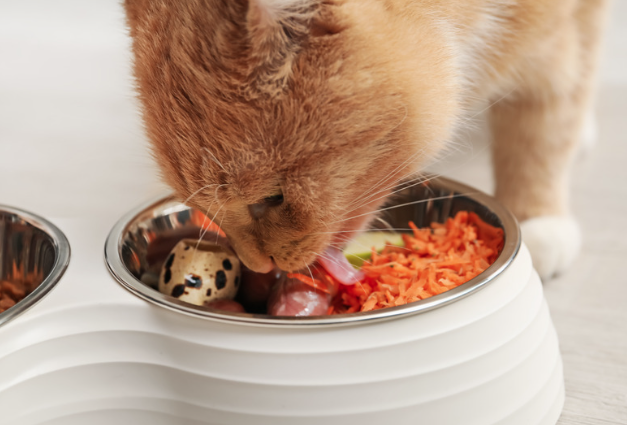
There’s a lot of buzz these days about raw food diets for pets—but what does that actually mean? A raw diet is composed primarily of uncooked meat, either pre-packaged or homemade, instead of the cooked dry or canned foods that often contain grains or other plant-based ingredients. Since cats are obligate carnivores with limited ability to digest plant matter, feeding a raw, meat-based diet might seem like an obvious choice.
Why It’s Not So Simple
Feeding a raw diet without veterinary guidance can put your cat at risk for malnutrition or illness. Even as carnivores, domestic cats’ wild ancestors ate a surprisingly varied diet of birds, rodents, insects, organs, and bones—something that’s difficult to replicate with commercially raised meat. Processed cat foods, which have been researched and refined for decades, are designed to provide balanced nutrition with added supplements like taurine and vitamins A and D. Proper nutrition has been a key factor in improving cat health and longevity, along with vaccinations, spaying/neutering, and indoor living.
Safety Considerations
Raw meat can harbor harmful bacteria such as Listeria, E. coli, Salmonella, and Campylobacter. Even if your cat doesn’t get sick, these bacteria can spread to humans or other pets in the home. People who are immunocompromised, elderly, or very young are especially vulnerable. Safe handling, storage, and cleanup are critical if feeding raw.
Making It Work
Some cats do thrive on raw diets—but it’s a delicate balance that takes more than just offering grocery store meat. The right plan requires careful attention to variety, supplementation, and hygiene.
When to Ask for Help
If you’re considering a raw diet for your cat, schedule a consultation with one of our veterinarians before making any changes. We can review your cat’s current diet, assess nutritional needs, and develop a safe, balanced plan—so your cat gets all the benefits of a raw diet without the risks.


office hours
- Mon-Fri6:30am - 8:00pm
- Sat7:30am - 6:00pm
© 2026 Bishop Ranch Veterinary Center & Urgent Care. All rights Reserved. Privacy Policy.
Powered by:
